Wishy-Washy Whiplash

Dear Parent,

I like that.  No, I don’t.  I had that before and I liked it.  I don’t like it now.  I like her.  No, I never really did.  I never told you, but…   Children are wishy-washy whiplash makers.  Simple advice:  Take it in stride.  Our kids are like all kids–multiplied by 10, of course.

Caught between wanting to please and rejecting in order to control their worlds, traumatized children rarely know what they themselves like.  Beyond that, trauma brains tend to repress negative feelings.  Unfortunately, that means joy is repressed, too. Many of our kids have little curiosity about things related to them that they enjoy.  They are curious about worldly things–sex, the dark underbelly, anything you say no to–but not their taste buds, their preference for ocean over mountains, their physical temperature, what they enjoy, what they truly want.

Here is what you can do to help them get out of the wishy-washy whiplash dance. Ask them to slow down, try it and see.  Slow down, get to know the person.  Slow down, be friends before sweethearts.  Slow down, taste it.  Taste it twice.  You can even do fun mindfulness exercises like holding a raisin on the tongue without chewing.  Have them notice different things about the raisin: texture, shape, feel on the tongue, sweetness, flavor, the way it changes when chewed, whether they like the feel, and, finally, whether they like that raisin (because all raisins do not taste the same).

If you take the time to teach your child mindfulness, you might avoid a chiropractor bill in the long run.

The Attach Place

The Attach Place Center for Strengthening Relationships

Love matters,

Ce

To sign-up for daily Wisdom for Adoptive Parents, click here.

The next 8-hr. Trust-based Parent Training is scheduled for June 18th and 25th from 12 noon to 4 pm.  $200 per two person couple.  Childcare available for $30 each day, second child $10 additional. To sign up, email Jen@attachplace.com and she will register you.

TIME CHANGE: Monthly Adoptive Parent Support Group is every second Wednesday of the month from 6pm to 8pm.  Group and childcare are free.
picture of cover
You can find Ce’s book on Amazon.com.

Holiday Hearing Loss

Dear Parent,

Beware there is a special hearing condition that occurs in our challenged children on holidays like this one.  See if you recognize it.  Timmy/Suzy/Alex/Sarah can hear when you call out hot brownies in the kitchen, but miss entirely a request to get shoes on. Selective hearing is a parent/child relationship killer in your midst.  Maybe we need to start a selective hearing research project to find a cure.

Actually, selective hearing is what we parents are inclined to think, but that is a misnomer; as technically that is blaming the wrong body part.  The research, by the way, is in.  Our children hear just fine–except of course when there is a true, tested hearing problem. The issue we are dealing with has no name; however, I am fond of calling it spiky thinking.  And spiky thinking is a problem of the pre-frontal cortex, not the inner ear.

Under holiday stress, our trauma-brained children are inclined to be particularly spiky thinkers.  Here is the issue.  Your child hears your command. The amygdala checks for danger, cortisol does its thing (or not), and your child responds (or not).  Parents are tend to believe that spiky thinking is willful.  While some behavior is willful, most behavior from our differently functioning children is caused by fear being triggered at the limbic level.  Once triggered, the amygdala broadcasts into the executive function a false alarm that freezing, fleeing, or fighting is required.  How can a safe parent’s directive to go get shoes trigger a child into survival mode?  Answer:  Our children come to us wired for danger. Only novel experiences, plus the smell of brownies, can override the usual fear of a parental call to action.

Parent commands in the past (or in the implicit memory) might have been followed by child abuse, chaos, loss, or suffering of some kind.  Our children are scared of certain voice tones in parents, and sometimes in the actual role of parents altogether.  Once traumatized, a brain, mostly unconsciously, shuffles through a zillion possibilities once the brain sends a danger alarm. What is wrong? Did I do something wrong? Is she mad?  Does he think I put the towels away wrong? What did I forget to do?  Are we going somewhere I don’t know about? Where? Who will be there? What will happen?  Am I going to live somewhere else now?  Am I going to be hurt there?  What if…?  And on and on it goes until interrupted by a trauma-sensitive parent who slows down, squats down, gives a little soft eye contact, assures safety, shows calm, makes a gentle request, and waits for a response.  Labor intensive?  Yes.  Effective?  Yes.  That’s what works on a holiday (and any other day) to cure spiky thinking.

You can enjoy holidays with your kids.  Simply keep the truth in mind:  Holidays are by nature stressful to our children and parents are often the trigger for escalating children into fight, flight, or freeze.  That said, parents can adopt a compassionate, trauma-sensitive parenting approach, rendering spiky thinking only a small part of the holiday experience.

And one other little tip: Resist the urge to consequence or punish your child for spiky thinking.  It really is not bad behavior, as much as it is a complex traumatized brain on holiday excitement.

The Attach Place

The Attach Place Center for Strengthening Relationships

Now go out there and have some holiday remembrance and fun.

Love matters,

Ce

To sign-up for daily Wisdom for Adoptive Parents, click here.

The next 8-hr. Trust-based Parent Training is scheduled for June 18th and 25th from 12 noon to 4 pm.  $200 per two person couple.  Childcare available for $30 each day, second child $10 additional. To sign up, email Jen@attachplace.com and she will register you.

TIME CHANGE: Monthly Adoptive Parent Support Group is every second Wednesday of the month from 6pm to 8pm.  Group and childcare are free.

picture of cover

Stealing For Feeling

Dear Parent,

Our attachment-challenged and special needs children do things we often have a hard time understanding. Parents have a tendency to label these things nonsensical, stupid, ridiculous, criminal, and crazy. I have been guilty of the same thing sometimes, even though I do understand.

Because there are so many articles, TV shows, and Internet pieces on how prisons are full of attachment-challenged adults, it makes sense that you would be worrying fiercely about your child who steals. The obvious conclusion is that your child will end up in prison. That is jumping to a fear conclusion.

Your fear may cause you to distance yourself, over control, or shame your child when you experience behavior that you don’t understand. Resist an emotional response. Use your thinking skills to quell your own fear so you can be therapeutic in your response, rather than hurtful.

Our children often do not understand why they stole something; therefore, asking them why will not likely beget a meaningful answer. The following are some of the reasons why:

  • Stealing something often holds the promise of filling up a pervasive hole of emptiness and deprivation in one’s core. There may be variances and nuances, but the result is usually a vague hope of getting something that will make them feel better, less empty, more special, less deprived.
  • Stealing feels good. The act of taking something that one knows is forbidden produces an immediate neurochemical boost—adrenaline and dopamine. It’s a jolt that children often experience as powerfully pleasing. There is a downside to stealing, but these children have poor cause-and-effect thinking, so the threat of the downside will not break the urge to feel good. The high reinforces stealing the next time. That is often why children repeatedly steal.

The good feelings resulting from stealing outweigh the pain of punishment; therefore, punishment will not work to extinguish stealing. Give it up. Go for a calm relational intervention. It sounds like this: Oh, you brought home something that isn’t yours. You must really have wanted to feel better, so you took it. We don’t steal in our family—it’s wrong and it’s against the law—so you are going to return it with an apology. That’s it. Over and over again.

Parents, I can feel your cringe.  My light handed, low-emotional response goes against the parenting imperative to punish bad behavior.  Unfortunately, that will not stop the behavior from repeating.  Imposing painful punishment will not reinforce better decision making in the future for our kids;  it will, however, create a barrier between you and your child, reducing your relational influence to zero.  Without relational influence with your attachment challenged child, you will have a captive body with checked out heart and mind.  That condition will not prevent stealing in the future.

The Attach Place

The Attach Place Center for Strengthening Relationships

Love matters,

Ce

To sign-up for daily emails of Wisdom for Adoptive Parents, click here.

The next 8-hr. Trust-based Parent Training is scheduled for June 18th and 25th from 12 noon to 4 pm.  $200 per two person couple.  Childcare available for $30 each day, second child $10 additional. To sign up, email ce@attachplace.com and I will register you.

TIME CHANGE: Monthly Adoptive Parent Support Group is every second Wednesday of the month from 6pm to 8pm.  Group and childcare are free.

picture of cover


To buy your very own copy of Drowning With My Hair On Fire: Insanity Relief For Adoptive Parents by Ce Eshelman, LMFT, go toAmazon.com or www.attachplace.com/drowing-hair-fire.  Please be so kind as to leave a review on Amazon.  Thank you.

Rusty Humphries and Ce Eshelman on National Foster Care Awareness Month

Dear Parents,

May is National Foster Care Awareness Day established by Ronald Reagan in 1988 to raise awareness of children and foster parents everywhere in the U.S.

There are 400,000 children in foster care right now. If you have a warm heart and a desire to give, consider opening your home and your arms to a child from difficult beginnings.

Here is Ce Eshelman, LMFT and Rusty Humphries discussing National Foster Care Awareness Day.


The Ugly Strings

Dear Parent,

Being of the bootstrap type, I am not one to wallow long in disappointments.  Brush off, jump back up: my motto.  Then, there are times when my relational failures with my children break my heart.  I am disappointed to the core that I cannot intervene in the whirlwind that is my child at this point in her young adult life.  And, I have to face the fact that it is not in my control.  She has her own trajectory.

For the last four months she was back home, I wondered when my feelings of hope and faith would run out.  How many times could I be manipulated, lied to, and used before I would wake up with nothing in my heart?  It turns out that love does matter, and it persists beyond reason.  I am disappointed to find that my ability to hang in here with hope and faith for a different outcome has pooped out.

Once again, I am the bitchy, bad mother; the adoptive mother who never had anything to offer except money and defective parenting.  Once again, I am rejected and cutoff for setting a boundary that I felt had to be set.  In the process I took the low road a couple of times. I am not proud. I am, however, continually humbled by the deep-seated effects of trauma and abandonment on the psyche of young children.

Eventually, down the road, my daughter will come back in need.  Her glasses will break; her ankle will twist; the system will be unfair; she will be hungry, homeless, helpless.  She will come back to my doorstep in tail-tucked, desperation, calling me Mommy.  I usually meet the need because she is my baby, my heart.  I love her dearly and it rarely goes well. She feels ashamed, a failure, beholden for needing me.  My expectations for her to use my help wisely scares and burdens her until she lashes out.  Heads or tails, I may or may not lash back; and around we go one more time. That is our well-worn dance.

I always want to take a different path with her, but it is tricky for me.  I am kind of twisted up.  My husband in frustration asks, What would you tell a parent in your office?  He thinks I have magic words there that I don’t apply to myself, but I don’t really.  I honestly cannot unravel enough to get a clear thought.  That is the way of attachment entanglements. For awhile, one cannot think.

I do, however, know the path; it is just freaking hard to walk it.  Here it is: only give love and other stuff freely, without strings of expectation for my daughter doing right by me.  My child does not have the personality structure to do right by me.  Why does she have to do right by me? That is my thinking that keeps the entangled dance going.  Those are the strings I attach to my love and my financial support.  If I cannot cut those strings, we marionettes will continue doing what we do.

My emotional work is right in my face.  I might need a chain saw to cut these strings. Come hell or high water (I have no idea what that actually means), I am going to get it done. Brush off, jump back up.

The Attach Place

The Attach Place Center for Strengthening Relationships

Love matters,

Ce

To sign-up for daily emails of Wisdom for Adoptive Parents, click here.

The next 8-hr. Trust-based Parent Training is scheduled for June 18th and 25th from 12 noon to 4 pm.  $200 per two person couple.  Childcare available for $30 each day, second child $10 additional. To sign up, email ce@attachplace.com and I will register you.

TIME CHANGE: Monthly Adoptive Parent Support Group is every second Wednesday of the month from 6pm to 8pm.  Group and childcare are free.

picture of cover


To buy your very own copy of Drowning With My Hair On Fire: Insanity Relief For Adoptive Parents by Ce Eshelman, LMFT, go toAmazon.com or www.attachplace.com/drowing-hair-fire.  Please be so kind as to leave a review on Amazon.  Thank you.


Disorganization Nation

Dear Parent,

I live with four young adults with extremely disorganized brains.  That, of course, is not the science.  Neuroscience tells us that the executive function–the part of the brain that governs organization, sequencing, cause and effect, logical thinking–of traumatized children has been delayed and in some cases damaged by long term exposure to stress hormone, cortisol dumps.  Whatever the reason, the result is hard to live with.

I thought the following might help some of you with older attachment challenged, trauma-brained children living at home.    They live at home long into adulthood, so prepare yourself. Here are some ways I go about helping everyone participate in the function of the family:

  • Every day there is a chore list waiting with a 24-hour time frame.  There are usually two chores assigned to each person. Some days there are no chores. Yippee.
  • When a chore is not done well, it appears again the next day for a “Try again.” No one gets in trouble over undone chores.  Just a reminder or a little lesson on how to do it better.
  • Bedroom cleaning finds its way onto the chore list, if necessary. And it is always necessary with some.
  • I give them all a full allowance on Friday to support a sense of relationship, family, sharing and cooperation. I don’t nit-pick or take money away for missed chores. I just give them a do-over, training, or reminder for mistakes and accept that they are human.
  • Everyone is responsible for doing their own laundry, and I let them decide how to cooperate around the use of the washer/dryer.  I could organize it for them, but I think they need to learn to collaborate with others.  One day I will not be here and they will still need clean clothes.
  • I talk about cooperation when things lag–like using the last of the toothpaste, TP, paper towels, wash clothes–and encourage them to take initiative to make sure the next person has a supply. No one wants to be on the one sitting down, staring at a bald paper roll with one square of TP.
  • There is a list on the frig when someone uses the last of something, like butter. Everyone writes on the list.  Sometimes frozen waffles gets written four times a week.  I just can’t seem to remember to buy them.
  • We all have established shower times, and exceptions are often made.
  • The main living area is always clean and presentable, so guests are welcome any time without a fuss.
  • I pay for a housekeeper every two weeks to do the deep stuff.  This saves my life. Disorganized brains are not usually deep cleaners, and I have a job.

    The Attach Place

    The Attach Place Center for Strengthening Relationships

Love matters,

Ce

To sign-up for daily emails of Wisdom for Adoptive Parents, click here.

The next 8-hr. Trust-based Parent Training is scheduled for June 18th and 25th from 12 noon to 4 pm.  $200 per two person couple.  Childcare available for $30 each day, second child $10 additional. To sign up, email ce@attachplace.com and I will register you.

TIME CHANGE: Monthly Adoptive Parent Support Group is every second Wednesday of the month from 6pm to 8pm.  Group and childcare are free.

picture of cover


To buy your very own copy of Drowning With My Hair On Fire: Insanity Relief For Adoptive Parents by Ce Eshelman, LMFT, go toAmazon.com or www.attachplace.com/drowing-hair-fire.  Please be so kind as to leave a review on Amazon.  Thank you.


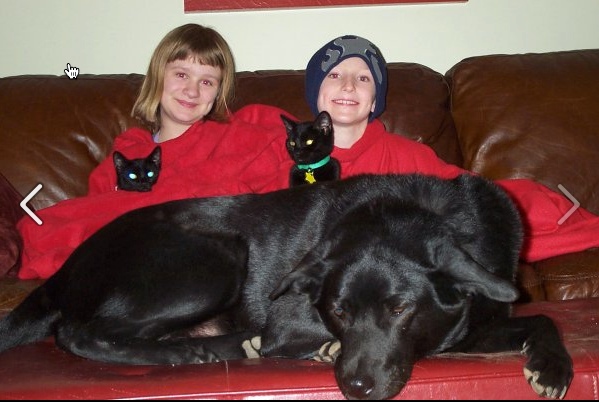
Annie, Devon and the animals we love

Compassion Is An Essential Ingredient

Dear Parent,

My heart breaks when I hear your frustration and desperation in the face of your traumatized, attachment challenged child’s continual shenanigans.  I remember those feelings with stark clarity.  There were times when raising my children where I felt quietly suicidal, and a moment when homicide was a secret thought.  I am not joking, nor proud, nor taking it lightly.  I was attachment challenged to the max with no idea how to make things different. I felt helpless, powerless, angry and despairing.

Parents usually snicker a little–or roll their eyes in exasperation–when I call their child’s behavior shenanigans.  My use of that silly word marks the shift in my own child rearing experience: from one of hell and anger to one of love and compassion.  Before thinking shenanigans, I thought bad, horrible, embarrassing, hateful, and criminal about my children’s behavior.  My own feelings, thoughts and beliefs about what was happening was creating my reality, destroying my beautiful life.   During that time I blamed my children.  It was their crazy behavior that was ruining my life.  And, the more I thought that way, the more I believed myself.  The more I believed myself the more hopeless, angry, and desperate I became.

Here are a few things I learned to embrace that changed my parenting life and probably the hearts of my children:

  • My children (and yours) are seriously impacted by abuse and/or abandonement before coming to me
  • Their brains are different because of trauma, and need long-term therapeutic parenting
  • My brain is different because of trauma in my own childhood
  • Their shenanigans are like toddlers in bigger bodies
  • Shenanigans are not personal assaults on me
  • My task as a parent is to give consistent structure, nurture, and acceptance
  • It is not my children’s job to meet my needs for love, respect, power, and control
  • It takes a long time to create safe relationships with traumatized children
  • Safe relationship is the only way to create the conditions in the brain for positive change
  • I can love my children, even when they don’t know how to love me back
  • I can love my children, even when they do shenanigans
  • I can love my children, even when they disappoint me
  • I can love my children, even when adopting children turns out to be unfathomably hard
  • My children’s birthright is my love, acceptance and compassion
  • My children’s shenanigans are not who they are
  • Seeing their shenanigans as who they are interferes with loving them into health

I hope this helps you do some deep investigation into your own feelings, thoughts and beliefs.  The only person you can change is yourself.  In so doing, your children can become more and more who they were truly meant to be.

The Attach Place

The Attach Place Center for Strengthening Relationships

Love matters,

Ce

Ce Eshelman, LMFT, is an attachment therapist, adoptive mother, stepmother, guardian mother, dog/cat mother, grandmother, not her husband’s mother, and author of:

picture of cover


Available on Amazon.com.

Lying Is What It Is

Dear Parent,

This is a usual occurrence at my house.  I send my son to his room to clean it up before his friend comes for an overnight, and twenty minutes later I ask through his closed bedroom door, Is your room clean?  He yells out, “Yes.”  Since I know this boy, I open the door to find him stretched out across his bed reading a comic book over crumbled Ritz crackers, a dirty plate with utensil stuck hard on it, two half-eaten bagels (Why two?), various candy wrappers, a zillion cords to electronics he doesn’t even have access to anymore, and a lot of maybe laundered, maybe not laundered, clothing. There were other things, but I will spare you the visual.

In the moment of seeing him there, I am instantly disgusted by the state of his room and slightly dysregulated that he felt the need to lie to me.  Nowadays, it doesn’t take long for me to de-personalize the situation and slide back into regulation enough to say, Hey Buddy, clean up your room.  Lying is not necessary, while quietly pivoting away.  Scorching the earth like a Mommy Dragon is not the way to go.  It would cause us both further dysregulation, the room would not get cleaned, and our relationship would be strained one more time.

Lying is a maladaptive coping mechanism to hide a number of things, which only sometimes is laziness. Often my son lies because he literally forgot by the time he trekked the hallway to his room why he was going there in the first place.  Or, he reflexively lies out of dysregulation trying to get out of trouble because he has poor executive function; and, he didn’t get the cause and effect of his actions. Sometimes, he gets overwhelmed by the the size of a task, cannot figure out how to get organized to start it, and  distracts reading a comic book. The lie is just a cover.

These are not excuses.  They are very real executive function deficits from cortisol (stress hormone) poisoning his brain for most of his life.  My son has a trauma brain, which looks like severe ADHD that can be only slightly mediated by medication.  The rest of the time he needs simple directions, hurdle help with organization of large tasks, reminders, lists, and help understanding what led him to tell a lie about his room being clean.  Applying negative consequences to a maladaptive coping skill is like punishing a baby for pulling your hair. It won’t stop it from happening again in a few minutes, but it will make the child and the baby fear you.

Yes, it is mind numbing to continually need to help a child, however grown up they are (19-years-old and counting now).  But, it is what it is.  My son needs my help still.  Your child probably needs yours, too.  It takes at least 400 repetitions to create one new neuropathway.  Repetition is the key to learning for most of our children.  Getting angry when you are only on the 200th repetition is futile.

The Attach Place

The Attach Place Center for Strengthening Relationships

Love matters,

Ce

To sign-up for daily emails of Wisdom for Adoptive Parents, click here.

The next 8-hr. Trust-based Parent Training is scheduled for June 18th and 25th from 12 noon to 4 pm.  $200 per two person couple.  Childcare available for $30 each day, second child $10 additional. To sign up, email ce@attachplace.com and I will register you.

TIME CHANGE: Monthly Adoptive Parent Support Group is every second Wednesday of the month from 6pm to 8pm.  Group and childcare are free.

picture of cover


To buy your very own copy of Drowning With My Hair On Fire: Insanity Relief For Adoptive Parents by Ce Eshelman, LMFT, go toAmazon.com or www.attachplace.com/drowing-hair-fire.  Please be so kind as to leave a review on Amazon.  Thank you.

Spanking Is Anachronistic

Dear Parent,

I’ve been on a bit of a rant recently about stopping the dead end, research uninformed, culturally sanctioned (behind closed doors) childrearing practice of inflicting pain to get a child to learn.  Sorry about the ranting, but I just gotta do it a little more.

Perhaps it would be helpful to talk about the role rage and anger play in the culturally sanctioned (behind closed doors) childrearing practice.  When we hit our children in anger and/or rage, we are abusing them.  That’s the plain truth.  Have I ever hit my child in anger?  Yes, and if you have read my book or my blog, you know my children feared me because I consciously set about putting the “fear of God” into them. Frankly, I thought I needed to do that because they showed very little fear in the face of my best Joan Crawford, Mommy Dearest, hairy eye-ball.  It followed, in my mind, that the lack of parental fear at 3- and 4-years-old would certainly lead to them becoming axe murdering criminals in their later years.  I know many of you fear this. I went so far as to actually fear they would kill me in my sleep.  Fear is cra cra like that.

What I didn’t know then is what I can share with you today.  That lack of fear I saw in their faces was frozen terror from trauma caused by the several parents that came before me. My kids showed up in pure terror, and I didn’t help things by resorting to anger and rage over their lack of respect for my authority.

I am here to tell you that my children were never going to be axe murderers.  That was fearful, catastrophic thinking from the loss of my illusion of control.  My children didn’t need to fear me to do what they were told, thy needed to trust me to do what I asked.  I was so confused in the beginning of raising my very challenged and traumatized children that I couldn’t see how challenged and challenging I was.  I couldn’t think clearly myself, so I guess it makes some kind of twisted sense that I would try to teach my children not to hit by hitting them.

I was expecting ordinary child mischief from my kids and they were dishing out exponential amounts of B-movie ruckus. If I had know that they needed more TLC than the average child; more understanding; nerves of steel on my part; and the patience of a running river to keep the high road, maybe I would have held structure and bathed them in nurture.  Maybe. I’m not sure, but I hope so.

How cra cra do you get in the face of your child’s lack of trust in your parental authority?  If you are calling it defiance, opposition, resistance, evil, calculated, rejecting, soulless, heartless, or hateful, then I know you need help seeing your child for who s/he really is–a traumatized, terrorized, wounded child who needs lots of consistent structure, consistent nurture, and years of patient loving persistence.  If you aren’t giving your child those last three things, you need to get yourself some help to do it. Otherwise, it just gets worse, and no amount of spanking will change their fear into trust.

The Attach Place

The Attach Place Center for Strengthening Relationships

Love matters,

Ce

picture of cover


Ce Eshelman, LMFT, is an attachment specialist, adoptive mother, stepmother, guardian mother, dog/cat mother, grandmother, not her husband’s mother, and author of:

Available on Amazon.com.

To sign-up for daily Wisdom for Adoptive Parents blog, click here.
The next 8-hr. Trust-based Parent Training course is scheduled for June 18th and 25th from 12 noon to 4 pm.  $200 per two person couple.  Childcare available for $30 each day, second child $10 additional. To sign up, email ce@attachplace.com and I will register you.
TIME CHANGE: Monthly Adoptive Parent Support Group is every second Wednesday of the month from 6pm to 8pm.  Group and childcare are free.

Renaming Discipline

Dear Parent,

I wonder how I would view disciplining children if it were called shaping children or growing children or supporting children?  Would you see discipline differently if it were called something else?

I know the word discipline derives from the Greek word to follow or follower of a teacher (like Jesus). In the truest sense of the word, it follows that children are the disciples of parents (who often are not at all like Jesus); however, it does not follow that discipline means “to teach,” but rather it means “to learn.”  To teach is a misnomer.

In popular culture, discipline has come to mean something more authoritarian, power over, and punitive.  To discipline a child is to create learning through some form of pain–isolation from the family, restriction from play, loss of beloved things, slaps, spanks, verbal lashing, humiliation, and other unspeakable forms of torture in the name of discipline.  Pain of some kind is de rigueur,  as though pain infliction is the only way to get a child to learn.  Isn’t that odd?  Even a little counterintuitive from where I stand.

I wonder if I would have learned Spanish if every time I conjugated a verb incorrectly the teacher inflicted pain so I would learn.  I am actually having a hard time even imagining that scenario.  Of course, we all know pain is not necessary to learn Spanish or any other academic subject.  I think we all know that, except a lot of knock-down drag-out fights over homework might be evidence to the contrary.

Actually, to really learn Spanish (for native English speakers) there needs to be 1) a desire on the disciple’s part to learn, and 2) there may or may not be another reward involved, such as a passing grade, the ability to speak with someone in Spanish, the internal feeling of pride and accomplishment, or college entrance and employment advances.  Come to think of it: I’m pretty sure had pain been part of the equation, I would have elected not to learn Spanish.  I would have given up on my desire to learn it, and any of the possible rewards that would have accompanied acquiring Spanish speaking skills.  I never would have made it to college, because a language is required.  I would not have become a teacher or therapist.  Likely, I would not be able to afford the luxuries my professional career brings me.  I might have ended up living below the poverty line:  Perhaps even lose my will to accomplish anything in life at all.  I might have started hating Spanish, and learning, and teachers all together. I might have dropped out of school, given up on myself and my goals, and perhaps pursued a less than savory lifestyle to get by.

If I had to choose between painful success and painless survival, I’m not sure I would have had enough pre-frontal cortex developed in my high school years to make a decision that ultimately would have given me life advantages.  To clarify, the decision that would have given me life advantages would have been to continue on learning Spanish, while hating learning, hating teachers, and despite the pain inflicted when I made mistakes–despite the pain, not because of the pain.  (I thought about inserting an old Nun quip here, but I’m too serious about the topic to make it funny.)

What do you say we collectively stop painfully disciplining our children to teach them to learn and start supporting them, growing them, shaping them to learn instead?  Just a thought on this fabulous Friday.  Go have some fun with your precious traumatized, attachment challenged babies.  Playful engagement is the best teacher of children and it is  in their native language.

The Attach Place

The Attach Place Center for Strengthening Relationships

Love matters,

Ce

To sign-up for daily Wisdom for Adoptive Parents, click here.

The next 8-hr. Trust-based Parent Training is scheduled in June 18th and 25th from 12 noon to 4 pm.  $200 per two person couple.  Childcare available for $30 each day, second child $10 additional. To sign up, email ce@attachplace.com and I will register you.

TIME CHANGE: Monthly Adoptive Parent Support Group is every second Wednesday of the month from 6pm to 8pm.  Group and childcare are free.

picture of cover


To buy your very own copy of Drowning With My Hair On Fire: Insanity Relief For Adoptive Parents by Ce Eshelman, LMFT, go toAmazon.com or www.attachplace.com/drowing-hair-fire.  Please be so kind as to leave a review on Amazon.  Thank you.