Tag Archives: Complex Developmental Trauma

Without A Well Developed Prefrontal Cortex

Dear Parent,

Without a well developed prefrontal cortex, your child of any age cannot make sense of what matters in a productive life, logical consequences, parent/child hierarchy, morality, give and take, love commitments, integrity, honor.  If your child comes from difficult beginnings of any kind–adoption, birth accidents, illness, maternal illness or death, postpartum depression, multiple abandonments, abuse–the prefrontal cortex has been bathed in cortisol, which likely stunted expected emotional development.  If that is the case, using parenting strategies that rely on cause and effect, punishment, emotional demands, lecturing, logical consequences, hierarchical expectations, doing what is right, being good, relationship glue, conscience, and/or shame will make the problems worse and delay development further.

I heard that collective sigh, parents.  Strategies that rely on respect of the child’s life experience, regulation, shared power, training, repetition, acceptance, structure, nurture, safety, and empathy will help to lower the cortisol and raise the development quotient of the part of the brain where everything you are looking for lives.  It’s truly worthy parenting.  Any other kind is the opposite.

The Attach Place

The Attach Place Center for Strengthening Relationships

Love matters,

Ce

Upcoming Hold Me Tight Workshop

cropped-couple-two.png
​Jennifer Olden, LMFT presents a ​“Hold Me Tight​”​ Couples Workshop at The Attach Place Center for Strengthening Relationships in Sacramento, CA on May 28-29th.  If you are looking to improve your relationship​,​ this workshop will teach you how to create a stronger bond, lessen conflict, and increase trust and intimacy.  Based on Dr. Sue Johnson’s model for couples therapy:  Emotionally Focused Therapy.  Proven effective. Research based. ​Read more and register here.

The next 8 hr. Trust Based Parent Training is scheduled for April 23rd and 30th from 12noon to 4pm.  $200 per couple.  Childcare available for $30 each day, second child $10 additional. To sign up email Jen@attachplace.com and she will register you.
Monthly Adoptive Parent Support Group is every second Wednesday of the month from 5:30pm to 7:30pm.  Group and childcare are free.
picture of cover
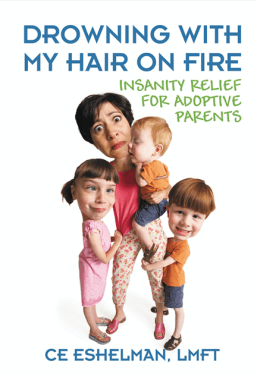
The public is invited to celebrate Ce Eshelman, LMFT’s new book, Drowning with My Hair on Fire: Insanity Relief for Adoptive Parents at an open house with brunch bites and bubbly on April 16th, 2016, from 11:30am to 1:30pm.  RSVP here.  Probably not the best event for children though.
To purchase a book click here or go toAmazon.com. Leave a review, when you can.

Utilitarian Parenting Is Institutional

Dear Parents,

Beware the trap of meeting all your child’s needs, but one–loving engagement.  If you don’t have loving engagement to give, then spare yourself from adopting a child from difficult beginnings or raising any child for that matter.  Structure is a very important part of therapeutic parenting, though it in no way heals the broken, fearful, traumatized heart of an adopted child.

Structure without nurture is institutional.  Institutions do not have what it takes to heal the wounds of complex trauma to the core.  Only structure with love and empathy will do that.  If you have adopted a child for God because you love God though you cannot feel love for your child, then I am sure God would not want you to do such a thing.  Utilitarian parenting will further manifest the wounds of the child.  It is hard enough to raise a traumatized child with structure and love into a well adjusted person in society.  Without love, maybe it’s easier for the parent (though I am not so sure about that), but a disservice to the child.

Okay, it is possible I am on a soap box.  Maybe I ran into one too many folks in utilitarian mode, and I am tipped over into talking about it.  It is okay not to adopt if you have all the means and none of the love warrior spirit.  No shame in admitting that.  None at all.

By the way, if you have lost your heart along the journey, I feel certain you can find it again with respite, self-care, and therapeutic help.  Sometimes depression, exhaustion, desperation, lack of support, and hopelessness seeps in around the edges and can lead to utilitarian parenting.  I surely understand that.  Get help to find your heart again for your child and for yourself.

The Attach Place

The Attach Place Center for Strengthening Relationships

Love matters,

Ce

The next 8 hr. Trust Based Parent Training is scheduled for April 23rd and 30th from 12noon to 4pm.  $200 per couple.  Childcare available for $30 each day, second child $10 additional. To sign up email Jen@attachplace.com and she will register you.

 Monthly Adoptive Parent Support Group is every second Wednesday of the month from 5:30pm to 7:30pm.  Group and childcare are free.
picture of coverCheck out Ce’s new book to be released this month.

Perspective

What if you looked at your child as perfect?  Would you be different?

The Attach Place

The Attach Place Center for Strengthening Relationships

Love matters,

Ce

Sometimes Logical Consequences Are Not Logical At All

What is a logical consequence?  This is not that easy to parse out for some of us.  I will give it a try here.

A logical consequence is an obvious outcome for positive or negative behavior.  Seems straight forward, right?  For example, if I go outside in winter without my jacket, logically, I will be cold. If I don’t want to be cold, next time I will wear my jacket. If I study for a test, logically, I will do better than if I don’t study. If I want to do the best I can, next time I will study before a test.

Actually, when children from difficult beginnings are involved in the equation, logical consequences have to be taught through repetition and short, novel experiences.  If the sensory systems and executive functions don’t work very well due to trauma and abandonment, your child might go out in winter without a coat no matter how many times you let her go out without her coat and get cold.  She might not have the ability to make obvious, logical decisions.  Just as you wouldn’t let a two-year-old decide to go out without a coat in winter to teach a lesson, you need to help your wounded child of any age take care of herself through training, cueing, and repetition.  What is logical for most parents, is not obvious for kids with slow to develop brains.

So, how can you teach a child from difficult beginnings to put on a jacket before going out, when it is cold outside?  First, slow down. Make jackets plainly available by the door. Shoes, too, if that will make the whole get ready for winter routine easier. Tell your child, In winter it is often cold outside, so everyone puts on a jacket before going out, even when one is warm while inside.  

Can you see what might be happening there?  It is warm inside the house, therefore, your child may not have an environmental cue that a jacket is required.  Yes, I know you know it is winter, you can hear the wind blowing outside, and see the rain hitting the window panes, but your child may not be tuned in to that at all.  To bring the cues into your child’s awareness, you might call attention to the wind sounds, and the rain drops on the windows and ask, Can you hear the wind outside?  See the rain drops on the window? What will you need to wear to stay warm when you go out?  Your child might say gloves and miss the jacket all together.  That’s okay.  Gloves are good, too.

Take time for training, connect the cues in the environment, and make the goods plainly visible.   If your child has trouble connecting the dots, you can put pictures of getting ready to go out in winter on a poster board by the door.  Another way of giving novel experience, is to simply open the door.  When your child feels the cold, ask, What do you need to wear to stay warm today?  Then close the door and help put on a jacket.  Letting your child go to school or outside in cold weather without a jacket to teach logical consequences is at best tone-deaf to the needs of your special child and at worst simply cruel, when that child does not have the self-awareness to learn the lesson.

The drawn out example above is an example that can be applied to nearly everything your child continues to do thoughtlessly–without thought.  Insisting that a challenged child learn from logical consequences alone will not work, and punishment is never a replacement for loving, therapeutic parenting.

The Attach Place

The Attach Place Center for Strengthening Relationships

Love matters,

Ce


The next 8 hr. Trust Based Parent Training is scheduled for April 23rd and 30th from 12noon to 4pm.  $200 per couple.  Childcare available for $30 each day, second child $10 additional. To sign up email Jen@attachplace.com and she will register you.

 Monthly Adoptive Parent Support Group is every second Wednesday of the month from 5:30pm to 7:30pm.  Group and childcare are free.
Look for Ce’s Upcoming Bookpicture of cover
 
Drowning with My Hair On Fire is a compilation of over 175 daily support letters to parents of adoptive children and other children from difficult beginnings.  With a forward by Dave Ziegler, Ph.D. and a brief personal memoir, this publication is a response to blog-reader requests for a book of letters that can be easily returned to day after day, when inspiration is hard to find.
Praise for Drowning with My Hair On Fire
This woman saved our family. This book will save your sanity! After years (and many therapists) of getting it wrong, Ce Eshelman got our traumatized family on the right path to attachment, sanity, and big biglove. Ce’s unique therapy is grounded in the latest brain research, her own struggles raising traumatized children, and work with hundreds of families like ours. Her stories, contained in this book, are our stories: full of pain, confusion, hope, faith, love and practical magic that really works.
Elaine Smith, Adoptive MotherDrowning with My Hair on Fire Book Cover
Ce’s daily blog has been a lifesaver, particularly when days are most dreary and hopeless.  Not only have her words of empathy proven to be priceless to our family, but I have often forwarded them on to others.  Such a comfort to feel understood, with no judgment.
Patty O’Hair, Adoptive Mother
In a real sense “Drowning with My Hair on Fire: Insanity Relief for Adoptive Parents” is a daily mediation of struggle, success, failure and getting up and trying again.  If that sounds like too much to subject yourself to then don’t adopt a challenging child.  And one more thing, shouldn’t we require prospective adoptive parents to read “Drowning with My Hair on Fire: Insanity Relief for Adoptive Parents” rather than another ‘All they need is love’ manual?
Dave Ziegler, Ph.D., founder of Jasper Mountain Center and author of many books on raising children from difficult beginnings.


Pseudo Adulthood

Dear Parents,

To all with attachment challenged and still traumatized adult children: I take off my hat. Okay, not wearing one, but you know…

I love my 20-year-old daughter so much that it can strain my marriage and even some friendships where the advice has been to distance and not enable her to use me–her mother–as a fallback plan.  To be honest my mother’s heart developed late in the adoption process.  It took me some time to accept the realities of the little traumatized beings that lived in my house.  Warm fuzzies did not engulf me when it came to mothering.

Now, seventeen years later, my mother’s heart is a warrior filled with fight for my precious girl who takes every thorny path she sees before her.  She hates asking for help from me, she says, because  I am so competent and never seem to need anything.  And yet, she often asks for so much help from me that she can hardly tolerate the shame.

Maybe one day I will not pick up the phone when she calls desperate for my advice that she will not take or my money that she will.  Until that day, I answer and I always give both. I am her mother and perhaps the only person in the world who loves her always.

The Attach Place

The Attach Place Center for Strengthening Relationships

Love matters,

Ce


The next 8 hr. Trust Based Parent Training is scheduled for April 23rd and 30th from 12noon to 4pm.  $200 per couple.  Childcare available for $30 each day, second child $10 additional. To sign up email Jen@attachplace.com and she will register you.
 
Monthly Adoptive Parent Support Group is every second Wednesday of the month from 5:30pm to 7:30pm.  Group and childcare are free.
Look for Ce’s Upcoming Book
 

picture of cover

Drowning With My Hair On Fire

Insanity Relief For Adoptive Parents
 
Drowning with My Hair On Fire is a compilation of over 175 daily support letters to parents of adoptive children and other children from difficult beginnings.  With a forward by Dave Ziegler, Ph.D. and a brief personal memoir, this publication is a response to blog-reader requests for a book of letters that can be easily returned to day after day, when inspiration is hard to find.
Praise for Drowning with My Hair On Fire
This woman saved our family. This book will save your sanity! After years (and many therapists) of getting it wrong, Ce Eshelman got our traumatized family on the right path to attachment, sanity, and big big love. Ce’s unique therapy is grounded in the latest brain research, her own struggles raising traumatized children, and work with hundreds of families like ours. Her stories, contained in this book, are our stories: full of pain, confusion, hope, faith, love and practical magic that really works.
Elaine Smith, Adoptive Mother
Ce’s daily blog has been a lifesaver, particularly when days are most dreary and hopeless.  Not only have her words of empathy proven to be priceless to our family, but I have often forwarded them on to others.  Such a comfort to feel understood, with no judgment.
Patty O’Hair, Adoptive Mother
In a real sense “Drowning with My Hair on Fire: Insanity Relief for Adoptive Parents” is a daily mediation of struggle, success, failure and getting up and trying again.  If that sounds like too much to subject yourself to then don’t adopt a challenging child.  And one more thing, shouldn’t we require prospective adoptive parents to read “Drowning with My Hair on Fire: Insanity Relief for Adoptive Parents” rather than another ‘All they need is love’ manual?
Dave Ziegler, Ph.D., founder of Jasper Mountain Center and author of many books on raising children from difficult beginnings.

Fear, Fear And More Fear

Whoow, back from Thangsgiving.  That was a nice long break, except for the fact that my heat has been off since Wednesday and it has been sub 55 degrees in my house for 5 days.   Burrrrr.  Chihuahuas are very shaky in a house with no heat.

Hope you had a lovely few days together.  I know holidays are not always jolly with healing children, so I am hoping that the calm of back to school routine has set in already.

I was talking with my son yesterday about why a classmate of his who also happens to come from difficult beginnings is suddenly spending a lot of time at our house.

Her mom is in cancer treatment, so we are helping out. But your friend doesn’t know, so you can’t tell her. 

“Oh,” he says, “I can see why she hasn’t been told.  Her mom probably doesn’t want her to feel the way I did when you had cancer.”

Suddenly feeling like I didn’t protect him enough five years ago, I fumble for words, Uh, yes, because she is different than you and not prepared to experience the fear.

“The terror, Mom. I was terrified the whole time,”  he emphasizes with air exclamation points.

I am sorry you were terrified for so long.  You were very brave.  You went to school every day, were beyond sweet to me, and held it all together until I got well.

“Yeah, then I had to go back to residential because I lost it when you got better,” he tells me as if I don’t know that is why he “lost it.”  

I don’t remember very much about that year, just that you were amazing.

“Me either,” he says. “Just the terror and the good times.  We had some good times that year, too. I remember those.”

Would you have wanted me to try and keep it from you so you wouldn’t have been so scared?

“That bald head probably would have given it away, Mom,” he says without humor. When I laugh, he sees the funny part and laughs, too.

“Let’s not do that again, okay?” he asks in a statement.

Okay deal, I promise, like that is possible, all the while hoping against all odds I am not lying right now.

Life is full of scary twists and turns.  Even after bringing them home from their difficult beginnings, we cannot always protect them from the parts of life that hurt.

Love Matters,

Ce Eshelman, LMFT

The Attach Place provides a monthly, no feeAdoptive Parent Support Group in Sacramento, every 2ndWednesday of each month.  Next group is December 9th at a NEW time–5:30 pm. Join us.  Child care provided.

The Attach Place offers an 8-hr. Trust-based Parenting Course every other month.  Our next course dates areDecember 5th and 12th, 2015. Sign-up online atwww.attachplace.com

The Attach Place supports The Wounded Warrior Project by providing free neurofeedback to veterans.  Feel free to send a soldier our way for an assessment and 20 session course of treatment.

Feel free to send this link to friends or family members who you would like to receive Daily YOU Time: Wisdom for Adoptive Parents.

Fear strikes at the core of children who were scared to

death from the beginning.

Stealing, Lying, Crying

Once upon a time there was a boy who felt bad inside about himself and he regularly did impulsive things that proved to himself and to others that he was indeed very bad to the core. One time this boy brought home something new from school every day. Each day his loving parents discovered the stolen item and administered some form of restorative justice, including a requirement to return the object with an apology. Of course, these weren’t the first stolen items they had come across and they were no strangers to the lies and crying admissions that came with the stealing.

This time, however, as the days rolled on and the stealing didn’t stop, the parents became frustrated and angry. They started to interpret these actions as innately criminal and heartless in nature. And, at the same time they personalized and interpreted the boy’s behavior as outright spite and disregard for them and their family ways, so they resorted to punishing him and saying mean, hurtful things. They were distraught and hopeless to ever get from this boy what they wanted–his goodness.

Sadly, the only time this boy felt “good” was when he was taking something he wanted or doing something he knew he shouldn’t.  In those moments, feeling good was the only thing that mattered.  Later, he felt disappointed that he got caught and ultimately sad about what he had done.  He knew his parents were exasperated with him and that they thought he was a bad seed because when they were really angry they said as much. What he knew for sure though was that deep down his feeling of badness was true.  He always felt that way and now everyone else knew it, too.

If the story ends here it is a tragedy.  If the parents find their compassion for the painful cycle this child from difficult beginnings is caught up in and help him understand his humanness; if they repair from the harsh things they said out of desperation and begin to reflect hope back at him in the kindness of their loving words and eyes, over time (sometimes a very long time) it will end up a hero’s journey for all.

You choose the ending for yourself.

Love Matters,

Ce Eshelman, LMFT

The Attach Place provides a monthly, no feeAdoptive Parent Support Group in Sacramento, every 2ndWednesday of each month.  Next group is December 9th at a NEW time–5:30 pm. Join us.  Child care provided.
The Attach Place offers an 8-hr. Trust-based Parenting Course every other month.  Our next course dates areDecember 5th and 12th, 2015. Sign-up online atwww.attachplace.com.
The Attach Place supports The Wounded Warrior Project by providing free neurofeedback to veterans.  Feel free to send a soldier our way for an assessment and 20 session course of treatment.
Feel free to send this link to friends or family members who you would like to receive Daily YOU Time: Wisdom for Adoptive Parents.

When your child behaves badly, reflect understanding and goodness back.

Love Matters,

Ce Eshelman, LMFT

Sexting And Adopted Children

This morning I was met with giggling and sheepish eye darting when both of my young adult children with questionable prefrontal cortices were telling me about their 17-year-old overnight guest last weekend who shared nothing less than a graphic video of anal sex downloaded from the internet. My kids were intrigued and scandalized at the same time. Both anxiously talked over one another, telling their similar versions of the same story, and how they independently got up and went to their respective rooms as soon as they realized what they were seeing. If this is true (and it seemed so), their mutual response was actually unusual.

I dare say many attachment-challenged children with poor executive function (as well as plenty of securely attached children with developing executive function), depending on age, would also be at once intrigued and scandalized. Also, they may be compelled to engage, watch repeatedly, and share further in the form of acting out what was seen–sexting it out, and possibly getting into serious hot water taking it all too far.

I encourage you to talk with all of your kids starting in 6th grade about texting rules and family expectations. While you are at it, share the law and legal consequences of sexting. Twenty percent of middle-schoolers with cell phones have received sexts. If your third grader happens to have access to one, then beware. This sexting abuse is happening at younger and younger ages all the time.

When my daughter was 14-years-old, she borrowed my cell phone for a quick call to a friend that lasted only five or so minutes. Later in the evening, from that school friend, I received a follow-up sext of his erect penis, up close and way too naked. I have no idea what she sent possibly prompting his sext, and it didn’t matter. She was 14, and he was 18. He committed a crime. The rest is history.

If your child is exhibiting poor judgment in other areas, you can assume the cell phone will be no exception. Set boundaries and keep them. It is okay for safety purposes to invade the privacy of a minor. No child NEEDS a cell phone. Every child NEEDS protection from him/herself when continually behaving unreliably and irresponsibly.

Sometimes we have to lend our brain power to our children while theirs is still under functioning. That may go on throughout the teen years well into young adulthood.

Breathe, dear parents, and carry on.

Love Matters,
Ce Eshelman, LMFT

The Attach Place Logo The Attach Place provides a monthly, no fee Adoptive Parent Support Group in Sacramento, every 2nd Wednesday of each month. Next group is November 11th at a NEW time–5:30 pm. Join us.

The Attach Place offers an 8-hr. Trust-based Parenting Course every other month. Our next course dates are December 5th and 12th, 2015. Sign-up online at http://www.attachplace.com.

The Attach Place supports The Wounded Warrior Project by providing free neurofeedback to veterans. Feel free to send a soldier our way for an assessment and 20 session course of treatment.

Feel free to send this link to friends or family members who you would like to receive Daily YOU Time: Wisdom for Adoptive Parents.

Raising kids in the age of technology–yikes.

When You Come To The Edge Of All That You Know

Listen folks, our kids do not come with handbooks, for the attached ones or otherwise, so you are in for the ride of your life. Buckle up. It’s bumpy out here in parentland.

When you come to the edge of all that you know, jump. And, I don’t mean over the cliff. I mean jump into the kind of parenting that is not what you were raised with; the kind that scares you; the kind that has to face the fact that you are not, never have been, and never will be in control of your children.

Your child is on a path s/he is trying to figure out, too. Your parenting job is to help him find a middle ground: the path between cannon-balling into the deep end without a life preserver and diving head-long into the shallow end. Neither is a good choice for your attachment challenged, traumatized child. The middle way is the only way with hope for a better life. If you are having trouble figuring out what the middle way is, let me help. It’s for your child to have enough family time to learn how to swim.

So, what is that scary, non-controlling, love-based form of parenting that can support your child into the middle way of a productive life? It’s called non-traditional, therapeutic parenting that focuses on relationship over compliance, and love over fear.

Traditional parenting is full of cause and effect, logical consequences that make so much sense to attached people who were raised by biological parents. Therapeutic parenting puts logical parenting with imposing consequences away for another day when your traumatized child has a brain that can make sense of that kind of intervention. Traditional parenting registers one way with attachment challenged children–I am bad and my parents are bad. Therapeutic parenting registers a different way–I am safe and my parents are loving. Which model makes the most sense for a child who came into your life believing at the core that s/he is bad because s/he was abandoned and parents are not to be trusted or even worse, dangerous?

If nothing is working to guide your child toward the middle way, you might check your parenting, then jump into something new, something untried, something less power and control oriented. Are you putting compliance in front of everything else that matters–like love, relationship, safety? If so, you are the one who has the brain power to change, not your challenged child. Doing the same thing over and over expecting a different result is, you know, insanity. If you are feeling more and more insane, try 100% therapeutic parenting. Over time, I promise the middle way will seem more and more possible for your child. Swimming happens.

Love Matters,
Ce Eshelman, LMFT

Read about therapeutic parenting in a number of books. Beyond Consequences by Heather Forbes and Bryan Post is a start. There are many others.
The Attach Place Logo The Attach Place provides a monthly, no fee Adoptive Parent Support Group in Sacramento, every 2nd Wednesday of each month. Next group is November 11th at a NEW time–5:30 pm. Join us.

The Attach Place offers an 8-hr. Trust-based Parenting Course every other month. Our next course dates are December 5th and 12th, 2015. Sign-up online at http://www.attachplace.com.

The Attach Place supports The Wounded Warrior Project by providing free neurofeedback to veterans. Feel free to send a soldier our way for an assessment and 20 session course of treatment.

Feel free to send this link to friends or family members who you would like to receive Daily YOU Time: Wisdom for Adoptive Parents.

Brain-based Parenting, What?

Brain-based parenting is one of the true keys to helping our complex, attachment challenged children become family kids.

Children with complex trauma and attachment breaches usually have reactive, stressed out brains.  They have very little access to their pre-frontal cortex, even when perfectly calm. That part of the brain is responsible for good judgment, organization, rational thought, language skills, cause and effect thinking, moral reasoning, and information recall.

Now toss some stress into the mix.  You know, surprise her with a sudden change of plans.  Tell him to quickly get ready for school.  Tell her do her homework with you or by herself without you.  Gently explain that his friend doesn’t want to play with him anymore because he doesn’t like being spat upon.  Challenge her to start that big project right now.  Shout, “Take the trash out!”  Give him an angry face.  Throw away a piece of trash/treasure from under the bed.  Confront her with a chore done poorly.  Hug him without his permission.  Tell her to change her too short skirt.  Hint about a surprise.  Remind him that Christmas is coming.  Nicely tell her to turn the TV off two minutes before the end of the show, and on and on.

If you were a brain-based parent, you would start all conversations with a request for a few deep breaths and a gentle reminder that nothing is wrong, that you are going to tell him something and he is not in trouble.  After that, you would say, “Ready?”  Wait for the all ready sign then slowly explain what comes next. “We are going over to Grandma’s house instead of to Uncle Tom’s house.”

I can hear your exasperation from here. Really? Are you kidding me? Do you realize that I have things to do, places to go, and no time for dilly-dallying?  I know. I know.

If you think slowing down to talk your child through the changes of every day life is like watching ice melt on a busy day, then consider the alternative. How much time does it take to get any kind of positive movement from your child once the stress hormone (cortisol) has kicked in, the pre-frontal cortex has gone off-line, and you have to resort to chasing him around the house, tackling him and making him put hisdarned shoes on now!  Fearful, raging, tantrums ensue.  Tick tock.  The clock did not stop and now you are an hour late (at least).

Two-minutes of proactive, brain-based parenting, can prevent hours of reactive, brain-based fall-out.

Love Matters,

Ce Eshelman, LMFT

The Attach Place provides a monthly, no fee Trust-based Adoptive Parent Support Group in Sacramento, every 2nd Wednesday of each month.  Next group is November 11that a NEW time–5:30 pm. Join us.  Online RSVP each month required when you need child care. 

The Attach Place offers an 8-hr. Trust-based Parenting Course every other month.  Our next course dates areDecember 5th and 12th, 2015. Sign-up by calling 916-403-0588 x1 or email attachplace@yahoo.com.

The Attach Place supports The Wounded Warrior Project by providing free neurofeedback to veterans.  Feel free to send a soldier our way for an assessment and 20 session course of treatment.

Feel free to send this link to friends or family members who you would like to receive Daily YOU Time: Wisdom for Adoptive Parents.

Take time for explaining, training, and listening to complaining.