Tag Archives: parenting children with special needs

Hold Me Tight Weekend Workshop for Couples with Adopted and Special Needs Children

Revised Dates:
April 21, 2014 6pm to 9pm
April 22, 2014 10am to 4pm
April 23, 2014 10am to 1pm

The Hold Me Tight Workshop is designed to give you a weekend away to connect with your spouse. This workshop will not teach you useless things; it will give you an opportunity to fully engage the deep, loving connection you desire in your relationship with your partner.

Hold Me Tight

Hold Me Tight

• Address stuck patterns and negative cycles
• Make sense of your own emotions
• Overcome loneliness
• Repair and forgive emotional and physical disconnection
• Communicate to develop deeper understanding and closeness

Hold Me Tight Couple

Hold Me Tight 

You will strengthen your bond through private exercises with your partner, didactic experiences, and video demonstrations of couples that have moved from distress to that longed for deep, intimate connection.

This workshop takes place in the safe environment of experienced attachment specialists and other parents experiencing similar attachment pushes and pulls in their lives because of the demands of healing the broken hearts and emotional difficulties of children from difficult biological beginnings, maltreatment, abuse and attachment breaches. YOU will be “seen” here and your struggles will be understood.

Dear Parent: This attachment focused couples workshop is brought to you at a 50% reduced rate by The Attach Place Center for Strengthening Relationships. We believe that you, your relationship, and your love matter. The stronger your relationship, the better able YOU will be to whether the slings and arrows of raising children from difficult beginnings.

This workshop is especially designed with YOU in mind.

To that end, we are dedicated to providing creative financing to make this opportunity possible for you and child care options for your children.

Who: YOU and Your Partner
When: April 21, 2014 – April 23, 2014
Cost: $300.00
Child Care: $5 per hour per child

Reserve your place by RSVPing to: info@attachplace.com

If you can carve out time for yourselves on a weekend, we promise that you will have valuable experiences to help you strengthening the safety, connection, and bond in your relationship.

Love Matters,
Ce Eshelman, LMFT, Jennifer Olden, LMFT, Robin Blair, MFTI,
The Attach Place
Center for Strengthening Relationships
Tel: (916) 403-0588 X 1
Email: info@attachplace.com


Stop Chatter Scrambled Brains

Sometimes my brain feels like scrambled eggs from all the chatter around me. Children from difficult beginnings are masters at filling the air with random talk. They are often highly anxious and highly habituated to being distracting so they can get attention without having to be real, present, or intimate–all three of which are frightening for them beyond expression.

This is actually child abuse.

This is actually child abuse.

Habituation is the problem. Habits are formed when a child from difficult beginnings has intolerable, overwhelming feelings that have been quieted by some kind of behavior, usually negative. When securely attached children have overwhelming feelings, they seek the comfort of a safe parent for soothing. If the attachment is damaged for some reason, then a child may seek other ways of meeting their needs, promoting the allusion that keeping distance will keep them from being frightened, getting hurt or experiencing abandonment. Those other ways become as habituated as hugs are in a secure child.

Habits must be broken, stopped dead in their tracks, before one can ever really know what feelings lie beneath.

That’s were YOU come in. Get a clear routine you follow, no matter what, when a negative behavior shows up–like random chattering that threatens to scramble your sanity.

The Attach Place

The Attach Place
Center for Strengthening Relationships

Practice appropriate social engagement with your child–yep, role play.
Don’t answer nonsensical questions. Say, “Nope, try again. ‘
Don’t answer the same question twice. Say, “Nope, try again.”
Withhold threats, frustration, and angry expressions.
Be a very good, calm, broken record. If YOU can discipline yourself, your child can stop the chatter habit.

Love Matters,
Ce Eshelman, LMFT and Mother
Attachment Specialist

Modeling, Molding and Making Meaning

Modeling

Modeling

Our children come home to us with imprints of their own. Many of them, not so great. Those imprints last a lifetime. In order to override the incredible tenacity of the built-in human mind-body complex, YOU have to model, mold, and make meaning of things you might think your children will just “get” along the way. They won’t unless you model, mold and make meaning out of the things your family finds important–family values made overt.

In our family:

Modeling

Modeling

  • children are taken care of by parents
  • we play and laugh a lot
  • we keep our house organized and clean
  • parents work in and out of the home and children go to school
  • learning is important
  • we ask for help
  • we use our words
  • everyone contributes to the family according to their ability
  • we can make mistakes
  • we love each other and don’t hurt each other
  • we solve problems with our words
  • we help each other
  • we eat together
  • we stick together
  • we have strong hearts
The Attach Place

The Attach Place
Center for Strengthening Relationships

You cannot just say it to the kids. YOU have to live it and make it meaningful every day.

Our kids will not just “get” it. We have to make it perfectly clear, over and over and over. That is how the molding happens.

Love Matters,
Ce Eshelman, LMFT, Mother and Attachment Specialist

Respite Reminder

No matter how tough YOU are, YOU need respite. It is okay to take time away from your attachment challenged children. Of-course, there is a bit of a price to pay before you go and when you come back, but you need down time for your neurochemistry to balance.

Living in a home that provokes constant high cortisol levels will burn out your adrenals, deplete your dopamine, and destroy your serotonin. These are all naturally occurring mood stabilizers. YOU need yours.

Get respite. Running on empty is a sure-fire way of putting your children into retrograde. That is NASA speak for meltdown.

Attachment Help

The Attach Place
Center for Strengthening Relationships

Again, I know you think you can’t get that. I know. And yet, I think YOU can if you are creative and determined to save your own sanity, your own life.

Love Matters,
Ce Eshelman, LMFT                     Attachment Specialist and Mother

Pre-school Teacher Parenting

We parent the way we were parented, even when we swore we would never do it that way. No shame here. Our parents did the best they could do, and so do YOU. If you are a great project manager rather than a great preschool teacher, then you are missing the writing on the wall, somewhere behind the fist hole. Our kids need that cheerful voice tone, those soft, forgiving eyes, a willingness to watch with excitement ants crawling in line across the sidewalk, the happy to see you face saying you are the cutest little creature on the planet, and personal engagement every day around the carpet circle.
Our kids usually know what to do, but they need heart-wise connection to feel like doing it–no matter how old they are.

The Attach Place

The Attach Place
Center for Strengthening Relationships

On hard days YOU might find yourself counting down the days until they turn 18, because pre-school teacher parenting is exhausting. I know that feeling all too well.

Still your children need YOU much more than they know in order to become the “grown-ups” they think they are already.

Love Matters,
Ce

Too Busy To Connect

Marriages fall apart when we are too busy to connect. Parent-child relationships fall apart when we are too busy to

The Attach Place

The Attach Place
Center for Strengthening Relationships

connect, too. Our kids can’t get a divorce, so get on your knees for the small ones and on your toes for the big ones. Make eye contact, smile, attune with love every day. A new day starts NOW.

Relationship is everything.

Love Matters,
Ce Eshelman, LMFT

The First Few Months Last A Lifetime

I am guilty of listing every behavior under the sun as “attachment challenged” behavior. This is a relative misnomer I know I am making, but there isn’t a good, easy way of calling out what many of us experience every day. So, for expedience (not necessarily clinical accuracy), I generically label. Mea culpa.

That said, I want to highlight a reality common to many of us–our children are often extremely concrete, lacking what some might call “theory of mind.” Theory of mind is what most of us who had a “good enough” mother/child connection in the early months take for granted–the ability to flexibly toggle between our inside and outside realities.

Many of our children have a very difficult time with subjectivity and objectivity in life. What is inside their minds and what is outside their minds is blurred and confusing to them. Our kids think that what they think is what everyone thinks. If you are reading this and you are having a hard time following what I am saying, then you may have had difficulty in your very early months, too (or I might be doing a terrible job explaining this.)

Upshot: this way of being is a personality style forged in the early months when one’s “mother” attends to a child’s

The Attach Place

The Attach Place
Center for Strengthening Relationships

every need and engages the child reciprocally, interactively and connectedly. Or not. The “or not” is the point here.

Your child is not being stupid, difficult, oppositional, or intentionally moronic (which are some labels I have heard from parents, and sadly used at points in my parenting life.) Our children were deprived of essential attachment and bonding experiences in the first few months of life that last throughout childhood. While there are some ways this can evolve and change over time, it is just as likely that this concrete, lack of cognitive flexibility will persist throughout life. This knowledge is intended to conjure empathy and patience. I hope you are getting that.

Love Matters,

Ce

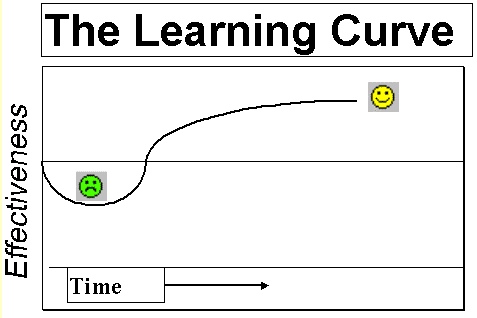
Learning Curve for Parenting Attachment Challenged Children

There is a steep learning curve in the course of raising children. Just when you think you have nearly figured out the secret to those complex chemical chain reactions the whole darned chemistry set blows up, and all you have is a mess in the kitchen.

Take heart, sweet parents. In every chaotic mess there is an opportunity to clean up the work space, fine tune the instruments, glean the data, analyze the sequences, and get a little breathing room, so you can start again. Persistence is your friend in the case of solving the parent/child relationship equation.

Parenting Learning Curve

Parenting Learning Curve

If your kitchen is blowing up, collect some meta data: What am I forgetting? What am I leaving out? What am I expecting? What is my goal? Where are my resources? Where is my heart? What are the basics–sensory,

The Attach Place

The Attach Place
Center for Strengthening Relationships

environment, connection, correction? What just happened? What did I do? Is there balance? Am I taking care of myself? Is relationship before compliance my mantra? What is the need? What is the point?

Learning curve or not, forward is the only way through. Persist.

Love Matters,

Ce

P.S. Sneak peek. I am excited to announce that in Sacramento, CA, The Attach Place’s Jennifer Olden, LMFT (Certified Supervisor of Emotionally Focused Therapy) and Robin Blair (EFT intern) are offering a reduced rate “Hold Me Tight” weekend workshop, March 21-23, 2014, especially for parents of attachment challenged children. This workshop is internationally celebrated as one of the most effective ways of strengthening the marriage/couple bond. There is limited space and YOU are the first to know! I will get you more details later this week. If you are interested, you can send an email to ce@attachplace.com. Stay tuned.

The Attach Place’s next Trust-based Parent Training Course begins March 29, 2014. Click here for more information. This is a link to the registration page.

Feel free to invite your friends and family to receive Daily YOU Time emails, too. Click here to sign them up. All you need is an email address and first name.

Attachment Panic–Freeze

Previously this week, I wrote about attachment panic reactions–fight and flight–and today’s topic is the third reaction in the trilogy, freeze. You will recall that attachment panic is often triggered when an attachment challenged person perceives deprivation or withdrawal of another’s love. The cellular memory of early deprivation and loss causes a reaction of fight, flight or freeze.
 
This is freeze:
When your 6 year old cuts her long hair on one side up to her ear and she faces your displeasure mute with wide open eyes while you ask her what in the world she was thinking; when your 15 year old glazes over like an ice statue when you approach him about stuffing his dirty laundry back into his drawers instead of the washer; when your 3 year old collapses to the floor in a fetal position just as you are leaving for work; when your 12 year old stares at you expressionless while yawning just as you are making a poignant point; when you see those blank, death grip, deer in the headlights, lights on no one home, checked out, empty faced stares, YOU are experiencing attachment panic freeze.
 
Try to remember that this is pure fear.  Take a deep breath or a little time out to regulate yourself, lower your intensity and voice tone, and soften your eyes, because you are scaring your child to death (again) if you don’t.  Nothing they have done is worth that.

Attachment Panic–Flight

Attachment panic can be as brutal for the attachment object (YOU) as it is for the person experiencing it. Attachment panic can occur when an attachment challenged person is triggered by perceived deprivation or withdrawal of another’s love. The cellular memory of early deprivation and loss causes a reaction of fight, flight or freeze.

This is flight:
When your 8 year old says nonsensical, random things when you are trying to make connection before you leave for work; when your 4 year old takes off running, forcing YOU to chase her to get her teeth brushed; when your 16 year old retreats to his room before you get two sentences out about the chores not being done; when your 12 year old loses about 8 years of brain power as you confront her on the family computer browser history that shows visits to unsavory websites; when these kinds of mind boggling events occur, YOU are experiencing attachment panic flight.

Try to step out of the trap of making sense of flight behaviors. They don’t make sense in the context of the moment. However, in the context of your child’s inner world fleeing from feelings of deprivation or fear of losing your love makes perfect sense.